South Kensington Painters & Decorators
Interior decorating
Interior decorating in South Kensington splits into three briefs that share a room but not a scope. Interior painting is the ceilings, walls and reveals you want recoated. Wallpaper and wall preparation is a hanging, including the background that has to be sound before a pattern will lie flat. Colour and finish planning is the schedule that names a product, a sheen and the edge where one surface meets the next. Read them against the rooms you have, then send the brief that matches the decision still open.
Discuss your project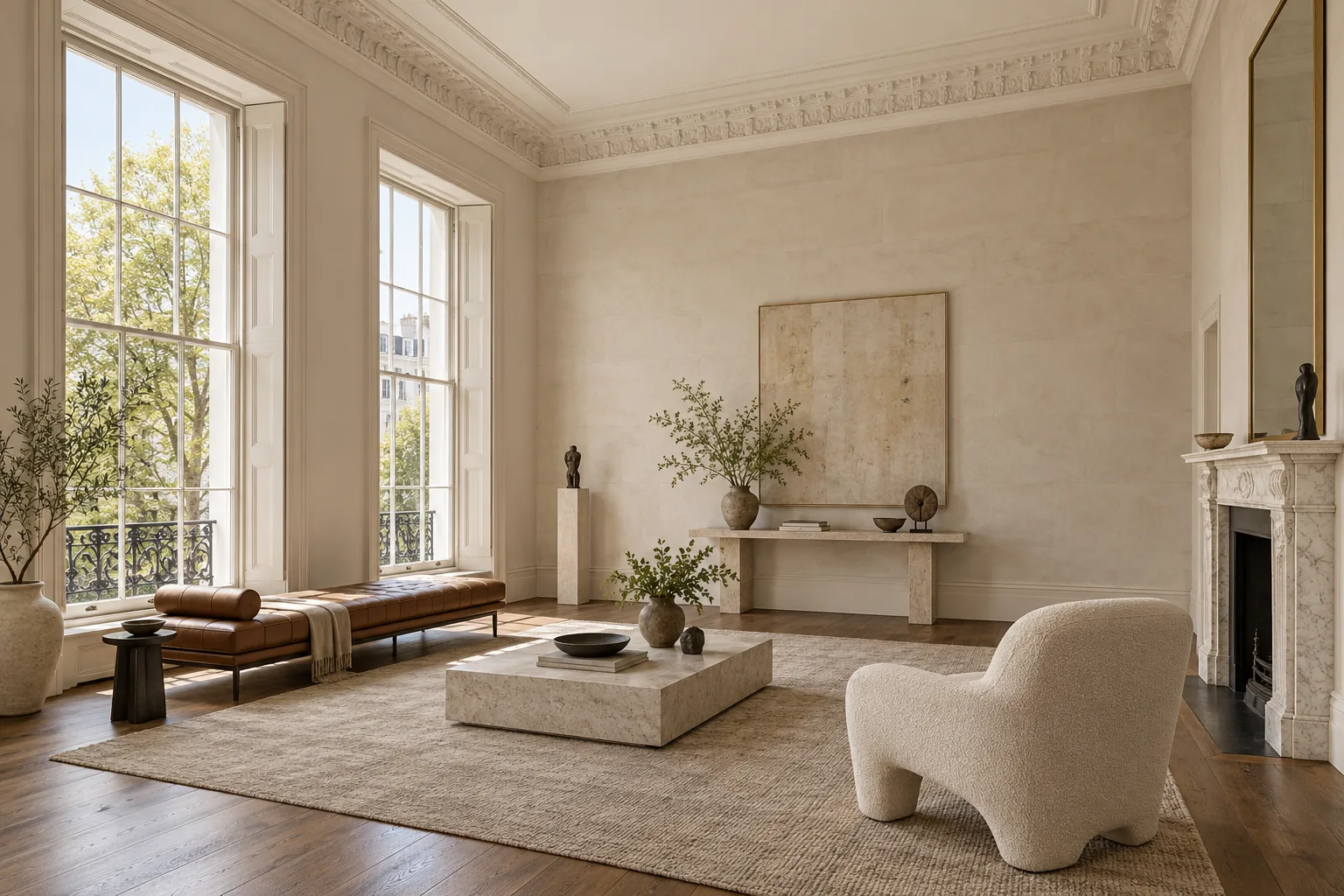
Interior decorating across South Kensington (SW7)
Interior painting
The most convincing interior schemes hold together at every distance: across the room, beside a window and close to a painted edge. For your South Kensington home, the brief starts with the way you want to use and see the space.
Read about interior painting 02Wallpaper & wall preparation
A wallcovering establishes a rhythm across a South Kensington room. Its relationship to the windows, doors and furniture needs to be resolved with the actual paper, so that the chosen pattern has a considered beginning and ending.
Read about wallpaper & wall preparation 03Colour & finish planning
Colour planning is the point at which a collection of attractive samples becomes a set of decisions for your South Kensington home. The useful result is a scheme with an identified finish for each surface and a reason for its relationship to the next.
Read about colour & finish planningWhere one interior service ends and the next begins
Start from the decision you can already name. If the walls and ceiling are to be recoated and no new sheet is going on, the conversation belongs with interior painting. If a pattern, a plain paper or a lining is part of the request, it belongs with wallpaper and wall preparation, even when the ceiling in the same room will be painted. If you are still choosing which product sits on which face, colour and finish planning comes first, and the painting or hanging is specified after that schedule exists. The three pages overlap in a room and still exclude one another. Painting does not hang paper. Hanging does not silently repaint the joinery. A finish schedule does not, by itself, fill cracks or apply coats. When a drawing room needs all three, send them as linked notes rather than as one vague line that says the room is to be decorated. Say which wall receives paper, which faces stay in paint, and which choices are still open. A cornice, a picture rail or a skirting that is staying should be named on the painting note or the joinery note, not left for the paperhanger to guess. If an old covering is still stuck to the plaster, removal is a preparation question on the wallpaper page. It is not assumed inside a repaint. The useful test is simple. Ask what would still need a decision if the other two services were postponed. That remainder is the brief to send now.
Converted terraces and mansion flats need different room notes
The Queen’s Gate appraisal describes large Italianate terraces, often of four or more storeys, many of them later divided into flats and apartments, in an area that also contains mansion flats. Those are not interchangeable interiors, and a South Kensington brief should say which one you occupy. A floor cut from a former house may keep a tall sash, a deep reveal and a cornice, while a later partition crosses what used to be one room. Measure the rooms as they are now. Do not reconstruct a plan you cannot see. A mansion flat may have been designed as a single home, with a shared stair that is outside your demise. Interior painting and paper then stop at your own door unless someone with authority has asked for the common parts. Height changes both services. A high wall alters the drop of a pattern and the way a ceiling colour is read from the doorway. It also changes where samples should be held: near the cornice as well as beside the skirting. Say whether the ceiling is in the painting, whether a lining is expected, and whether any decorative plaster is to be left untouched. None of this tells you that your particular flat is listed, or that a consent is required. It tells you which facts the quotation has to be drawn against. If the building’s own rules cover hours, protection of a shared landing, or a colour outside your front door, attach them or say they have not been obtained yet.
What to send with each of the three briefs
For interior painting, send the address, the floor, and the way in from the street door. Add a wide view of each room and a close view of cracks, stains or patches you want understood. List ceilings, walls and reveals that are in, and cornices or rails that must stay as they are. Say which rooms you still need at night. For wallpaper, add the design name and colourway if you have chosen them, and say whether a covering is still on the wall. Note the full drop, the recesses and the place a pattern should start, because a narrow slice beside a sash is often the piece people notice. Say where unopened rolls can lie flat and dry. For colour and finish planning, send the materials that will still be in the room: floor, hearth, curtains you are keeping, and any timber that stays clear. Separate decisions you have made from ones you want to talk through. A liked cutting is not yet a schedule. The schedule is a line for the ceiling, a line for the walls and a line for the joinery, each with a product and a sheen, plus the edge where paint stops against paper or a cupboard. You may enquire before those lines exist. Say so plainly, so sampling can be described rather than assumed. Photographs help. They do not replace the list of what is included.
Keeping part of the home usable while decoration is open
An occupied South Kensington flat rarely gives up every room at once. Write the order down. A bedroom needed each night is a different arrangement from an empty reception room that can stay closed until the work in it is finished. Interior painting usually opens the ceiling before the walls, so that later cutting-in is not speckling a ceiling already completed, and joinery follows or is masked in a planned gap. That sequence is general practice. The wait between coats is the interval the product states, and a cool room or new plaster can stretch it. Do not read the interval as a date by which the whole home will be handed back. Wallpaper needs a clear working wall, furniture that can move, and a dry place for rolls off the route you use each day. Lining, where it is included, is finished so its seams do not land on the seams of the sheet that follows. Colour planning can happen before either trade starts, with samples moved between the window and the inner wall, morning and evening. If a managing agent or a porter controls the lift, the stairs or the hours when materials may come in, name that person in the enquiry. Protection of a communal landing is not the same task as protecting your own floor. When the proposal comes back, check that the rooms you must keep using are still visible in the sequence, and that anything communal is either included with authority or clearly left out.
A South Kensington enquiry
What would you
like to change?
Start with the property address and the part of your home that needs decoration. Tell us what is there now and what you would like the work to achieve.
Your decorating enquiry
Outline the rooms, existing finishes and arrangements for access.